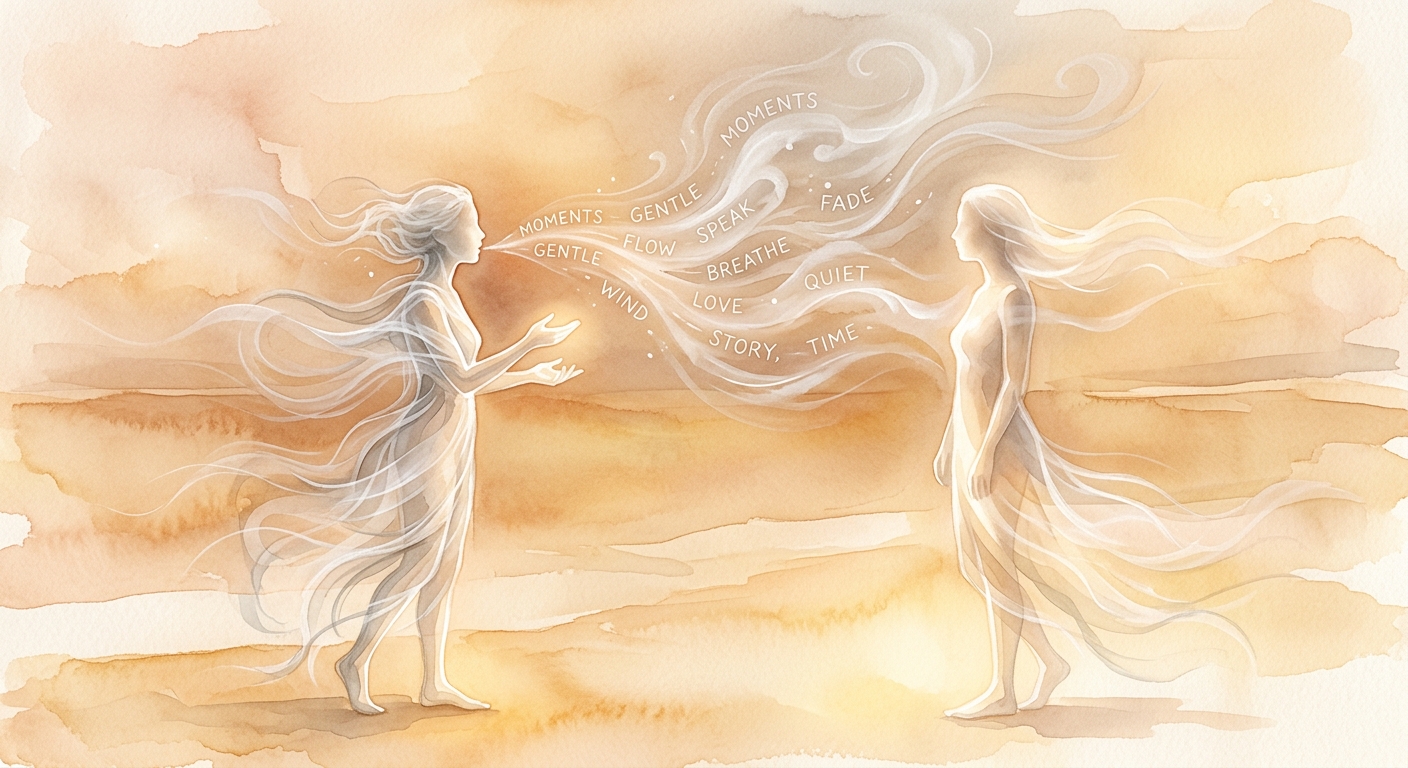
Why Does No One
Obsess Over
the Air They Need to Live
It isn't words that drive you —
it's you, the one who assigns meaning to words, driving yourself.
"Friend, the world is full of precious air. We cannot live without it — so it matters infinitely."
"Mm, yes. That's true."
"And yet — why does no one try to possess air, or feel driven by it, or even think much about it?"
"Because you can't grab air or own it. And besides, how would air ever drive you?"
"Right." "Of course."
"Then what about words? The criticism, the praise, the blame, the envy — all the things we pass to each other through our mouths. Why can't anyone stay still in the face of words? Some people contort their own thoughts and actions just to earn certain words. Others are broken by them, some all the way to death. And yet words aren't truth. They can't be held. They have no power to drive anyone."
"......"
It isn't words that drive you — it's you, the one who assigns meaning to words, driving yourself.
When praise makes you feel good, it isn't the praise itself responding — it's a belief inside you: "if this is true, I am someone of worth." The reason people are shaken by words is that they haven't yet settled, on their own terms, what is true about themselves.
Air says nothing about whether you are good or bad. But another person's words arrive as though they have the authority to decide. That is why they shake you.
Someone who has already written their own story — who they are, what they stand for — is not easily shaken. Not a blade of grass bending in the wind, but a tree rooted in ground.
Most people do not speak truth when they speak. They speak to fill something in themselves — to shore themselves up, to elevate themselves, to dress themselves in a better light.
The one who criticizes wants to confirm "I am right."
The one who praises wants to feel "I am kind."
The one who envies wants to believe "what they have was meant to be mine."
Every word is about the speaker.
What someone says to you is ultimately a mirror of their own inner state. The words are aimed at you — but they carry no real information about you. They carry information about what kind of existential lack that person is living with right now.
So someone whose sense of self is solid, hearing those words, sees clearly: "Ah — that is what they need right now."
But someone whose self is still faint takes the words as truth.
In the end, people with faint selves live inside a structure where they shake each other with words, each one confirming their existence through the other.
It is, at once, a little sad — and a little absurd.
Words are like air.
They cannot be held, cannot be owned, and are not truth.
How much they move you
is, in the end, a question of how well you know yourself.