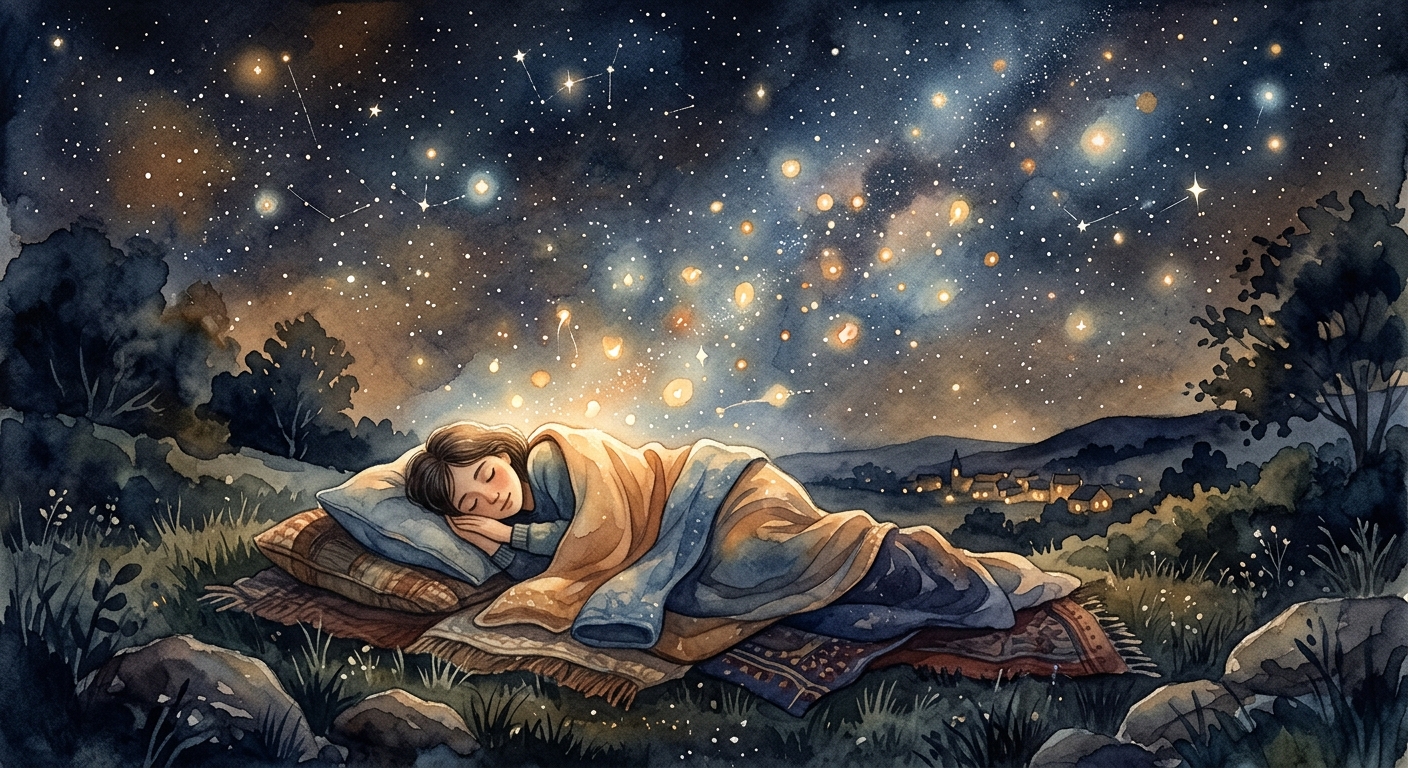
Sleep as Permission
Sleep is not mere recovery.
Each night, you step out of this world for a moment
and find your way back again.
What if you never had to sleep?
Eight hours returned to you each day. More than ten days gained every month, nearly four months every year. Efficient — of course it would be. More work, more learning, more living.
But would it really be more?
Sleep is not mere recovery. The moment you drift off, everything that happened today is quietly rearranged. In that darkness, the mind seals over wounds, sorts through memory, and tucks away the feelings you couldn't quite carry — sliding them gently into a far drawer. What broke during the day is, at least in part, mended by morning.
Which means sleep is, in fact, permission.
Permission to have failed today. Permission to stop, just for a while. Permission to close your eyes as if none of it happened — and then permission to open them again.
No matter how hard things get — no matter how much you want to disappear, how bitter you feel, how dark the future looks — every single night, you leave this world for a little while. And then you come back. It happens again and again.
Looking back, that's how it goes. The pain that felt unbearable then — it's a little more bearable now. Not entirely healed, but a little. And those little bits accumulate.
Yes, it would be efficient not to sleep. But every night, we close our eyes already half-broken — and the next morning, we get up anyway. That simple, repeated act is, in truth, the most tenacious form of survival there is.
As long as you keep getting up.
As long as you're still here.
Isn't that enough?