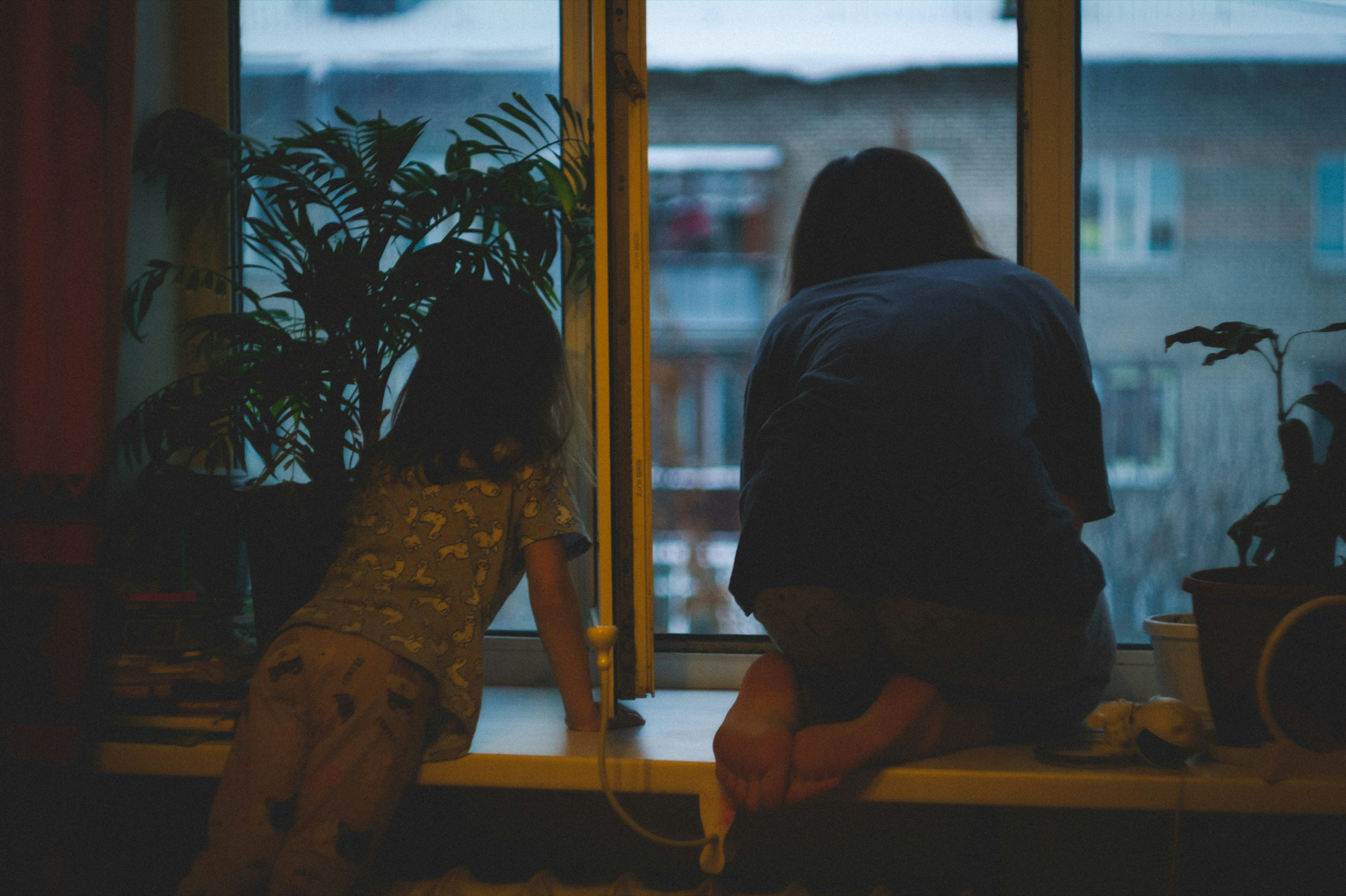
Forty Years With Her,
and Never Once
Knew Her
What she never said,
and what I said for the first time
A short call
on a holiday
On a holiday morning, I call my mother. "Mom, how are you?" Through the receiver her familiar voice stretches a little, then settles back. "Yes. Everyone's fine." After that the same kind of small news always follows, and the call ends without going long.
Once I hang up, a strange feeling passes through me from time to time. We have lived alongside each other for forty years, and from the call I just finished, there is not a single new thing I have learned about her. The time of the person closest to me is almost entirely unknown to me. Most days I forget that I do not even know.
I thought it was
their way of love
My mother rarely tells her own story. She does not say it was hard, or that she was hurt, or that she felt alone. When I ask if anything happened, the answer is always the same. "I'm fine." "That's just how it goes." A direct strike of silence.
For a long time I believed that was the older generation's way of love. A quiet dignity that refused to lay its weight onto the children. So I thought my part was to honor that silence.
Later I came to see it differently. Some of it was a choice not to speak, but more of it was simply that they could not. The older generation lived through a time that had given them no place to bring out their own story, no one to listen, and no permission that it was even allowed.
Behind the
name "mother"
The name "mother" is strong. Strong enough that most of the time of one woman who lived behind that name is hidden from view. Before marriage, before childbirth, before becoming anyone's mother, she was already a person. There were places she had wanted to go, shapes she had wanted to grow into, stretches of time that had been hard to bear.
And like any child, I grew up with almost none of that time known to me. The mother I knew was the mother who came after I was born. The woman before that, before she stepped into the role of mother, stayed blurred at the edge of my view.
Before she became anyone's mother, there was a person.
Not learning,
but facing
At some point I started asking her differently. Instead of asking how she was, I would ask about the old days. What kind of neighborhood she lived in as a child. What she had loved most back then. What sort of work she had wanted to do before she got married. The first time, she would laugh it off — "why are you asking that" — but if I sat in the same room with her two or three times, a little of it would begin to come out.
What I learned in those moments is this. Listening to someone is not learning new information. It is facing what was already there but I had been turning away from.
My mother's stories were less unknown facts than empty places I had not had the heart to look at. What filled those places was not new information. It was a way of seeing.
Our generation
is different
Then I turn the gaze back toward myself. My peers and I clearly live with a different grain than my mother's generation. We say the shaking part out loud. We say we fell apart, that we were scared, that we honestly do not know.
Once I had thought that was a weakness. The unavoidable leaking-out of someone not solid enough. We had been taught that what carried you through was a vow you firmed up on the inside. But once I lived through it myself, the truth turned out to be the opposite. What carried me through the shaking time was not a resolve I swallowed alone, but one sentence I let out of my mouth. The moment I told someone, "honestly, I'm not doing well right now," a new thread appeared — one that kept me from breaking.
Where weakness
becomes trust
At first I was afraid. I thought showing the soft parts would make people pull away. But what actually happened moved in the opposite direction. The more honestly I let out the things that were not going well, the closer the listener came.
A distance forms between you and someone who looks flawless. But standing next to a person who has admitted a weakness, people feel relief. The relief of "so it isn't only me." Showing vulnerability was the fastest path to break the distance and build trust.
What I had thought of as weakness becomes the capital of trust. People gather more when you let it show than when you hide it; relationships go deeper when you appear as you are than when you appear polished. This is an age where keeping the mouth shut is no virtue, and the courage to open it has become an asset.
Two times
face to face
Only then do the two times stand face to face. On one side is a time that could not bring its own story past the lips for a whole life. On the other is a time that lets it out as soon as it begins to shake. What one generation could never say, the next generation says as its first word.
I am the one standing between the two. I do not want to leave my mother's silence behind as merely "the way the older generation was," and I do not want to take my own generation's confession for granted either. The way the unspoken word is not a lack but a grain, the first-spoken word is not a flaw but a grain too. Standing between the two grains, I see more clearly where I am.
How to listen,
how to speak
So I have settled on two things. When I listen to my mother, I listen with distance. The shaded expectations I had built up where her choices did not match what I had wanted come undone the moment I admit that her choices were the way one person survived the era she was given.
And my own shaking, I do not hide. I bring it out as a signal of trust, not of weakness. Knowing the weight of what was never said, I treat what I say first as something more precious.
For her time, I become the one who fills it. For my own time, I become the one who lets it out. Listening and speaking are woven differently from the same seat. To keep both grains alive at once is, I believe, the most honest thing I can do as someone standing between two generations.
Between what was
never said and
what was said first
I lived forty years alongside my mother, and in all that time I never once truly knew her. That was not only my own carelessness. It was also that, throughout her life, she had almost no place to bring her story out. A person with too many things she could never say, and a person whose first words come too quickly — both are tied together by the same blood.
Now I know. In the face of her silence, I have to become the one who asks a beat slower, and in the face of my own shaking, I have to become the one who lets it out a beat sooner. I cannot fill a lifetime of not-knowing all at once, but I can make one place where the asking begins.
Someone lived the time I didn't get to live, and the time I lived becomes someone else's first words. Standing between the two, doing both the listening and the speaking — that is how I stand between two generations.