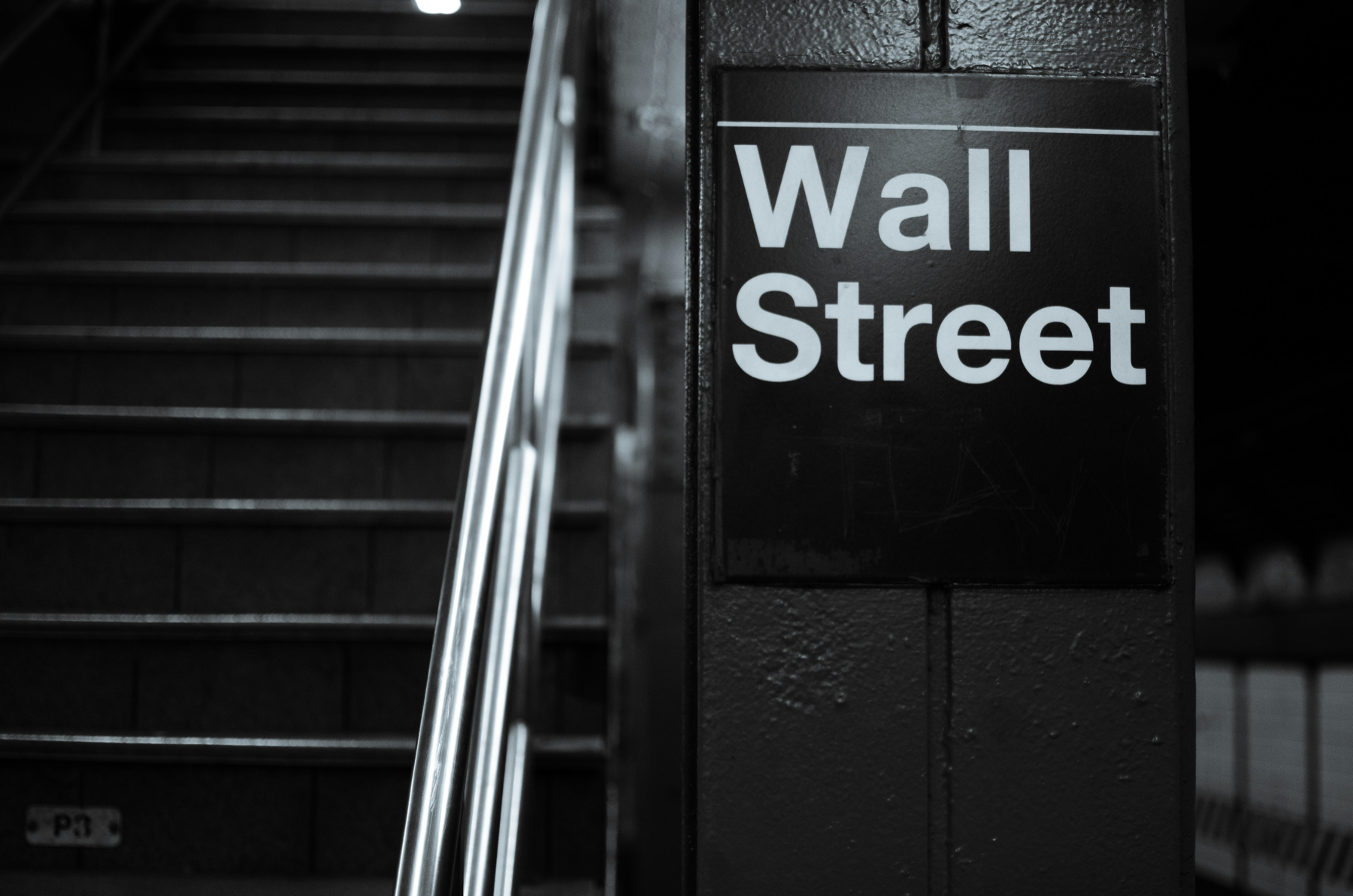
Six Months
the World's
Finance Stopped
From Bear Stearns in March 2008
to AIG in September.
What Is
a Mortgage
At the root of the 2008 crisis lies a single word: mortgage. It is the money you borrow from a bank to buy a home — typically repaid in small monthly installments over thirty years, one of the largest financial commitments of a lifetime.
The logic of the transaction was simple. The borrower keeps working, and home prices rise over time. If both hold, the bank is safe and the borrower builds wealth.
In 2000s America, one more assumption layered itself on top of that logic: "Buy a house and you can't lose." The belief that home prices simply do not fall. That single sentence underpinned everything that followed.
What Is
Subprime
Subprime refers to mortgages made to borrowers with weak credit — people who would normally be turned down as unlikely to repay. The way to lend to them anyway is straightforward: charge a higher interest rate.
In the mid-2000s, these loans flooded the market. Banks knew they were risky, but under one assumption they looked safe: home prices would keep rising.
If a borrower defaults, foreclose and sell the house. Prices only go up, so there's nothing to lose. That single sentence concealed the risk.
CDOs & CDSs,
Packaging the Risk
Banks did not simply hold the risky mortgages on their books. They sliced them up, mixed them with other debt, rebundled the result, and sold it as a new product — a CDO, or collateralized debt obligation. Think of it like a jar of mixed-fruit jam: blend enough varieties and even a few bad pieces get lost in the whole. The product looked safe because it was packaged that way.
Insurance was layered on top. CDSs — credit default swaps — were contracts that promised: "If this debt goes bad, we'll cover it." These promises were bought and sold freely.
The result was that no one could see who actually held the underlying risk. A single troubled mortgage moved through multiple balance sheets and emerged under an entirely different name.
"Too Big
to Fail"
Too Big To Fail. The phrase means exactly what it says: a bank so large that its collapse would shake the entire economy, so the government would surely step in. This was less a policy than an unspoken myth.
That myth made things worse. Losses would be socialized; gains would be pocketed as bonuses. An asymmetric game. The more risk you took on, the more you earned.
Lose, and the system absorbs it. Win, and you keep the upside. That is how the fractures grew.
Three stacked assumptions — home prices always rise, insurance is plentiful, government will catch any fall — quietly carried the system toward a breaking point.
Three Days
at Bear Stearns
Bear Stearns, founded in 1923, was one of America's five largest investment banks — a name that had survived more than eighty years of market upheaval. In a single week in March 2008, it vanished in three days.
The killing blow was not losses but liquidity. Bear ran on short-term borrowing, rolling over funding daily. When rumors spread that Bear was in trouble, lenders simply stopped. Within three days, every dollar of overnight funding had walked out the door.
The Fed intervened. JPMorgan bought Bear at a fire-sale price, with the government providing guarantees. It looked like the rescue of one firm, but the real signal was something else: even a major investment bank could disappear in seventy-two hours. The first crack had appeared.
The Fate of
Lehman Brothers
Six months later: Lehman Brothers. Founded in 1850, 158 years old, the fourth-largest investment bank in the United States. Bigger than Bear, with roots running deep across global markets. On September 15, 2008, it filed for bankruptcy.
This time the government did not extend a hand. The stated rationale was moral hazard — if you bail out every failing institution, markets will simply manufacture the next disaster.
But behind the principle there were also practical failures: too little time, no buyer willing to step up, and a quiet assumption that markets could absorb the blow. The weight of the decision was invisible in the moment. The collapse was not an isolated event; it was the beginning of an accumulation.
Enter AIG
Two days after the Lehman bankruptcy, the world's largest insurance company, AIG, began to buckle. On the surface it was an auto and life insurer. But quietly, in a corner of its business, AIG had become the single largest seller of CDSs — those contracts promising to pay out when debt goes bad.
Banks around the world had bought AIG's protection and used it to justify holding risky assets on their books. If AIG went under, the value of that insurance evaporated simultaneously across every one of those balance sheets.
A single insurer sat at the center of the global financial network's arterial system. The moment the connection became a constriction.
So Lehman was allowed to fall, but AIG was rescued. One was a domino you could cut loose; the other stood directly in front of a long chain of dominoes that could not be allowed to topple.
Negotiations
Behind the Curtain
During those six months, the real work of keeping the system alive did not happen in formal boardrooms with signed documents. It happened in late-night phone calls, hotel lounges, and back-channel meetings that never appeared on any official agenda — between Tokyo and Washington, between finance ministers who showed each other their hands outside the official channels.
Morgan Stanley negotiated with Mitsubishi UFJ in Tokyo. The U.S. government and Congress haggled over the terms of the TARP bailout. Treasury secretaries around the world exchanged information they could not release publicly.
When formal contracts froze, the resource that held the system together was trust. There, trust was not an emotion — it was capital. Measured, exchanged, and used as the unit of transaction.
The currency of those rooms was a shared sense of urgency, the ability to deliver accurate information fast, and relationships built over years. Those three things were the only liquidity still flowing.
What Is the
Money Market
The money market is where banks and large corporations lend to each other for days or weeks at a time — the oxygen of the financial system. It was considered the safest corner of finance: loans were short, so the risk of default seemed almost nonexistent.
Immediately after the Lehman collapse, one money market fund reported a loss. In a place where you put in a dollar and expected to get a dollar back, that dollar broke. The industry term for it: "breaking the buck."
A loss appeared in the one place everyone assumed was safe. That single fact was enough to freeze the entire short-term funding market.
The Moment
Trust Froze
The system did not truly stop when assets lost value. It stopped when institutions stopped trusting each other. Banks that had been lending to one another without a second thought yesterday were scrutinizing each other's balance sheets today.
"Cash is King" — that phrase was not coined in 2008, but 2008 proved it. When everyone clutches cash and nobody lends, transactions halt. Capital fled emerging markets: South Korea, Russia, and others watched foreign currency drain away.
The assets themselves did not vanish. What vanished was the trust required to put a value on them. Credit, it turned out, is just another word for trust — and the bill for that truth arrived at the highest possible price.
Why Knowing
Wasn't Enough
to Stop It
Once the crisis had passed, a harder question lingered. People had seen the risks. So why couldn't so many experts — smart, experienced people — bring themselves to stop?
Three layers of barriers stood in the way. The first was psychological. If your model is working, you process contradictory signals as noise. Confirmation bias and loss aversion conspire to keep you running the same play.
The second was organizational. Sharing information publicly could spook markets and cost you your position. So information stayed siloed, sitting on each person's individual desk.
The third was incentive. Short-term bonuses, the next quarter, the next election cycle. Letting the risk ride paid better in the near term than sounding the alarm. Between knowing and stopping, those three layers always stood.
What the Crisis
Left Behind
Congressional hearings were held. Thick reports accumulated. In 2010, the Dodd-Frank Act — sweeping new regulations designed to tighten oversight of large banks — became law. Most of the bailout funds were eventually recovered.
But the same patterns returned in different forms: the COVID shock of 2020, the rapid rate hikes that followed, the regional banking crisis of 2023.
Systems improve. Regulation grows tighter; capital buffers grow thicker. But the same human beings rebuild the same cognitive traps — powered by the same line: "This time is different."
Tipping Points
Only Become Visible
in Hindsight
The six months of 2008 are remembered as a sudden collapse, but look closely and it was nothing of the kind. Years of accumulated leverage, eroded underwriting standards, and deferred doubts all converged and burst at the same moment.
A great system does not collapse all at once.
It only becomes visible — at the exact instant accumulated pressure crosses a threshold.